
Shielding Vadodara’s Industrial Backbone: The Ultimate Guide to Panel AC Repair and Maintenance
From Makarpura to Halol GIDC, discover the critical engineering and professional support that keeps CNC machines running, PLCs cool, and your production moving.
If you manage a manufacturing facility in Makarpura GIDC or supervise a high-throughput line in Halol GIDC, you are already familiar with the intense pressure of “downtime.” When a massive CNC machine, a precise plastic injection molder, or a critical PLC (Programmable Logic Controller) drops dead, the cost isn’t just measured in the repair bill. It’s measured in lost man-hours, missed shipment deadlines, and hundreds of thousands of rupees in idled machinery.
In 90% of these cases, the problem isn’t the machine itself. It’s the invisible enemy: heat. The sensitive electronics—VFDs, servo drives, logic boards, and power supplies—housed inside sealed electrical cabinets generate massive amounts of internal heat. They are hermetically sealed to keep out dust and oil mist, which means the heat has nowhere to go. Enter the Panel Air Conditioner (or CNC Cooler).
This specialized cooling unit is the first and only line of defense for millions of rupees in capital equipment. Yet, it is often the most neglected. In this comprehensive engineering guide, we will break down the science of panel cooling, the precise failure modes across Vadodara’s demanding GIDC environments, and the rigid service protocols required to keep your plant operating at peak efficiency.
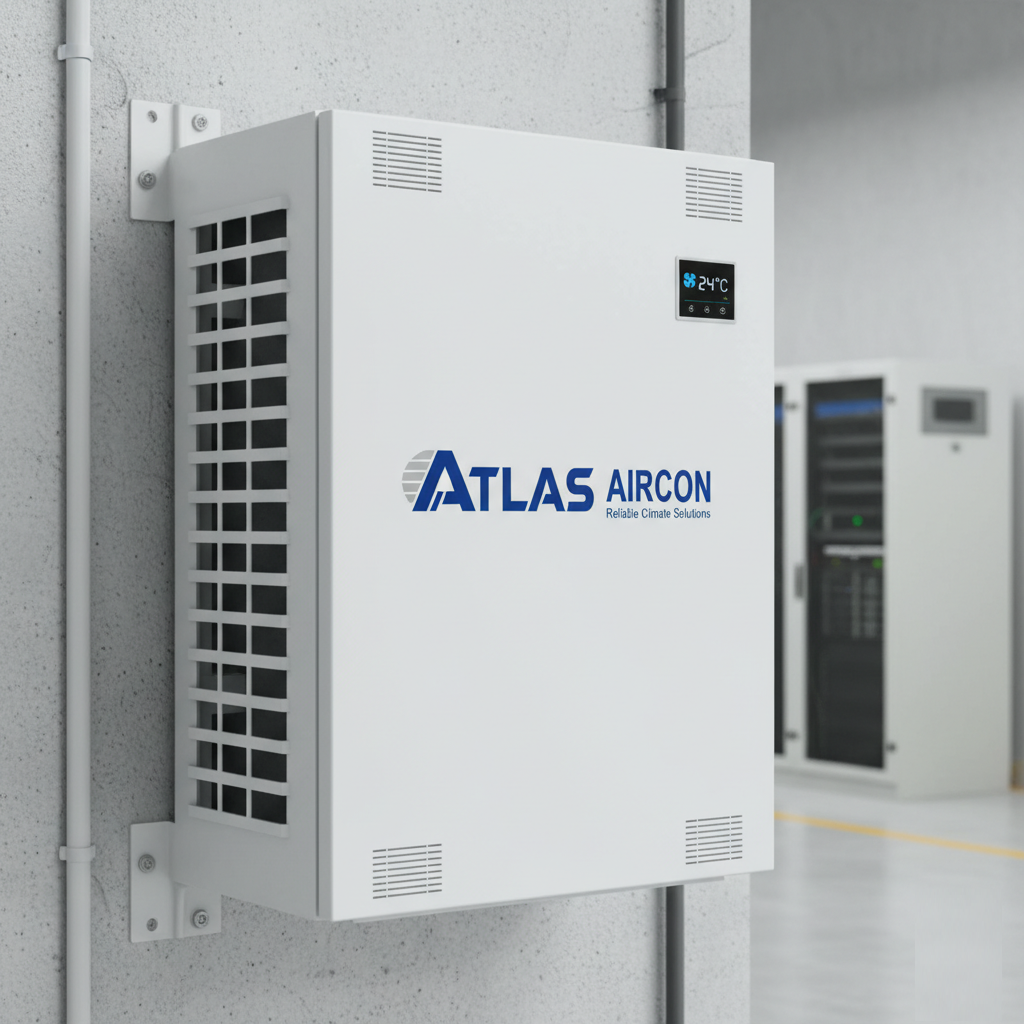
Why Panel ACs Fail in Vadodara’s Industrial Zones
A panel AC doesn’t work like your office air conditioner. It has a different job description: maintaining a specific, constant temperature and low humidity *inside* a sealed cabinet while operating in a brutal *outside* environment (the GIDC shop floor).
In fast-developing zones like Manjusar – Savli GIDC and Masvad GIDC, the environment is particularly hostile. Here are the main causes of failure we encounter:
- 1. Dust and Particulate Matter (The Makarpura Factor): Foundries, machining centers, and chemical plants in older GIDC zones generate heavy dust. If this dust penetrates the external (condenser) side of the AC, it forms an insulating blanket over the fins. This causes the compressor to run much hotter than designed, leading to thermal overload tripping and eventual failure.
- 2. Oil Mist and Coolant Spray: This is the silent killer in CNC machine shops. Oily residues from cutting fluids get sucked into the external condenser fan and coils, mixing with dust to form a sludge that is nearly impossible to remove without specialized chemical washing. This sludge dramatically reduces heat exchange.
- 3. Intense Ambient Temperatures: The summers in GIDCs can push temperatures *on the shop floor* past 48°C. A panel AC must work under severe pressure to eject heat into this hostile environment. Any minor maintenance issue is magnified tenfold in the summer.
- 4. Vibration Failure: These units are often mounted directly onto CNC machines or heavy presses. The constant vibration weakens copper brazing, flare nuts, and electronic connectors, leading to refrigerant leaks and intermittent PCB failures.
- 5. Fan Motor Failure (Internal & External): The external fan must run 24/7 to push away heat, while the internal fan ensures constant air circulation within the cabinet. If either fan motor fails, the unit (or the machine it protects) will overheat immediately.
The Great Panel AC “PCB Swap” Scam
In my 20+ years of industrial HVAC engineering, I have seen plant managers waste millions because a non-expert technician misdiagnosed a complex problem. The most common scam (or simply lack of knowledge) is the “PCB Swap.”
A specialized panel AC, such as those made by Rittal, uses a complex digital controller that monitors internal temperature, external conditions, pressure thresholds, and fan RPMs. If a simple sensor wire is vibrating loose, or if the condenser is severely clogged, the controller will display an error code to protect the compressor.
An unqualified technician often looks at the blinking error code and declares: “The PCB logic board is dead. It needs a replacement.” These replacement boards can cost ₹25,000 to ₹55,000 and have long lead times. They install the new board, but the *real* issue (the clog or loose wire) remains, and the new board fails too. True professionals diagnose the root cause, they don’t just replace the brain.
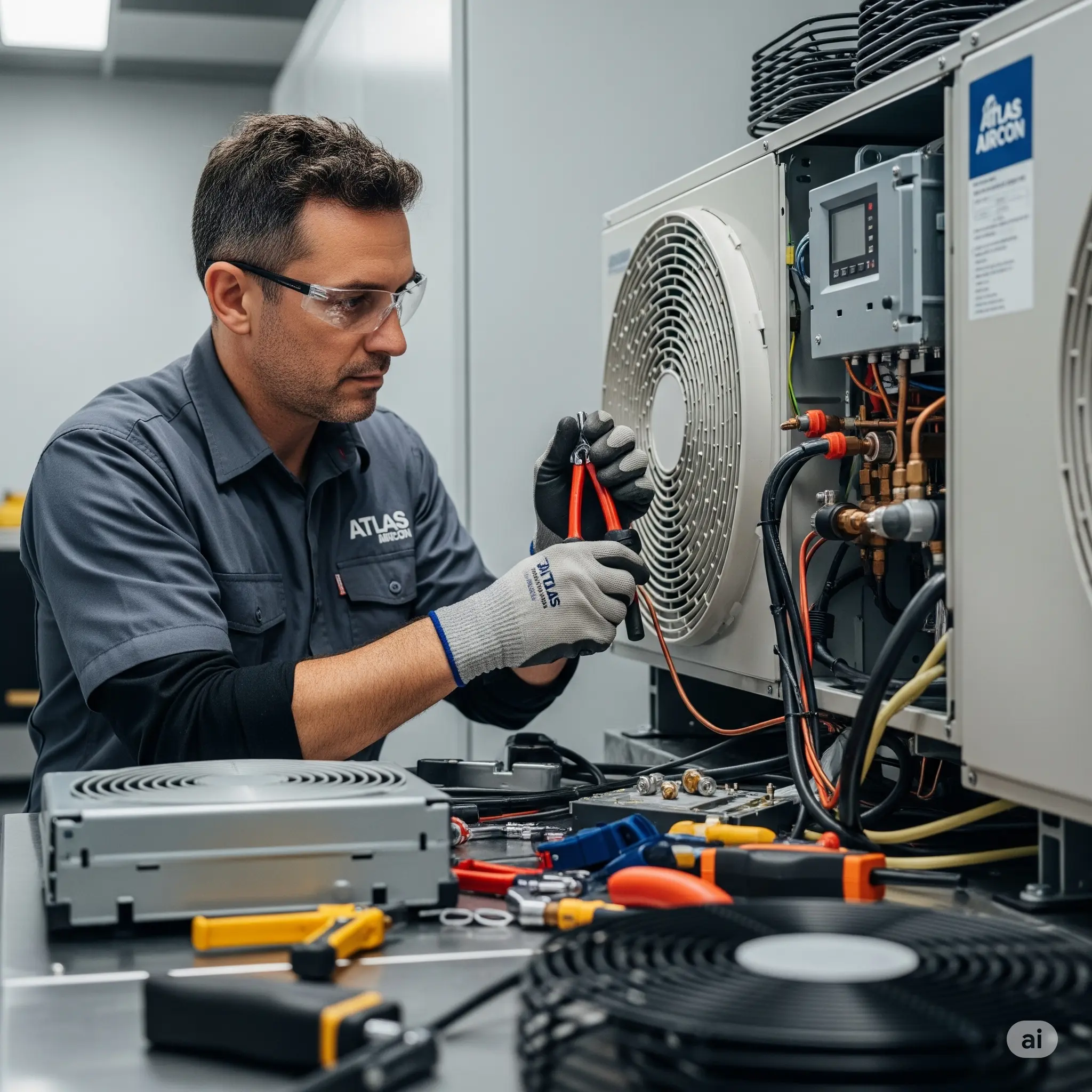
The Ultimate Protocol: How True Professionals Repair Panel ACs
When you call Atlas Aircon for a repair in Waghodia GIDC or Manjusar GIDC, we follow a strict industrial protocol. We are not just fixing an appliance; we are protecting an asset.
1. Diagnostic Code Decoding & Sensor Check
Our engineers use specialized diagnostic tools and error-code charts for major brands (Rittal, Advance, Hoffman, etc.). We don’t guess. We verify every temperature sensor and pressure switch input against calibrated values to ensure the controller is receiving accurate information.
2. Power Supply & Control Circuit Testing
We analyze the 230V or 415V power input and the sensitive 24V DC control circuits. Many problems are caused not by the AC itself, but by voltage fluctuations common in industrial estates, which damage internal contactors or cause intermittent reset loops in the controller.
3. Hermetic Pressure Analysis (No Leaks Compromise)
Refrigerant leaks are rare but disastrous. We check operating pressures. If low, we *never* simply top up. We isolate the system, use nitrogen pressure testing to locate the precise vibration fracture, braze it, pull a perfect vacuum, and recharge by weight (as detailed in our Vadodara Gas Charging Guide).
4. Chemical Coil Regeneration (Chemical Wash)
Standard air blowing is useless against GIDC sludge. We perform a specialized chemical regeneration. This involves a pressurized foam application that chemically breaks down oil and dust sludge without damaging the aluminum fins, restoring the heat transfer capacity to 100%.
5. Calibration & Operating Cycle Verification
After the repair, we calibrate the thermostat and controller settings. We run the system through full operating cycles, verifying that both fan motors, the compressor, and the condensate evaporator (if equipped) are functioning in perfect synchronization.
Specialist Focus: Rittal Panel AC Service and Repair
Rittal is the global gold standard for industrial cabinet engineering. However, their systems are German-engineered and extremely sophisticated. A technician who only services standard window ACs *cannot* professionaly repair a Rittal Panel AC.
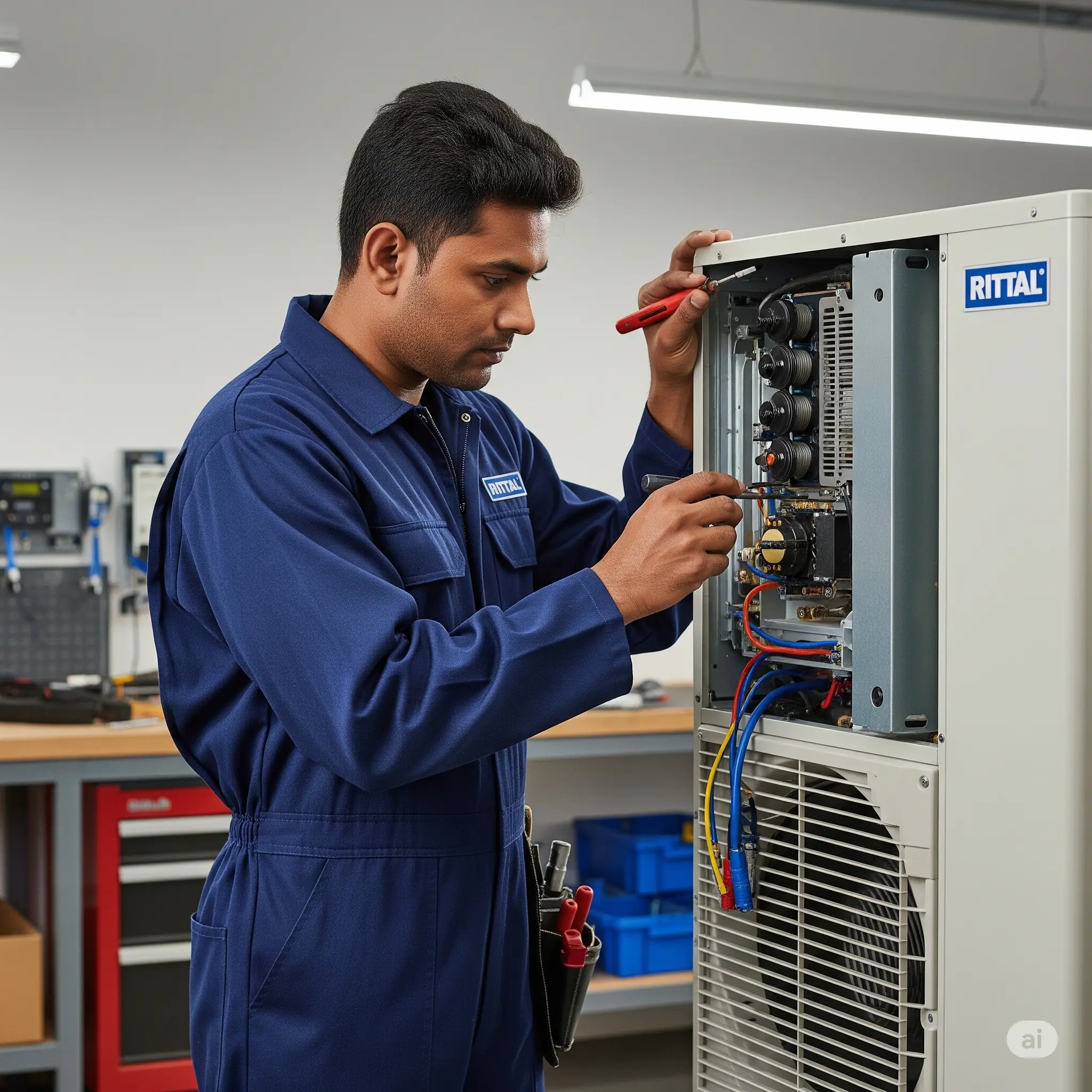
At Atlas Aircon, we have deep hands-on experience and a specific protocol for Rittal Panel AC service and repair. This includes understanding the precise BTU calibration of their specialized split units, the proper calibration of their digital controller parameters, and the delicate handling of their high-efficiency fan matrices. We utilize the proper diagnostic flowcharts that allow us to pinpoint faults without resorting to expensive, unnecessary component replacement.
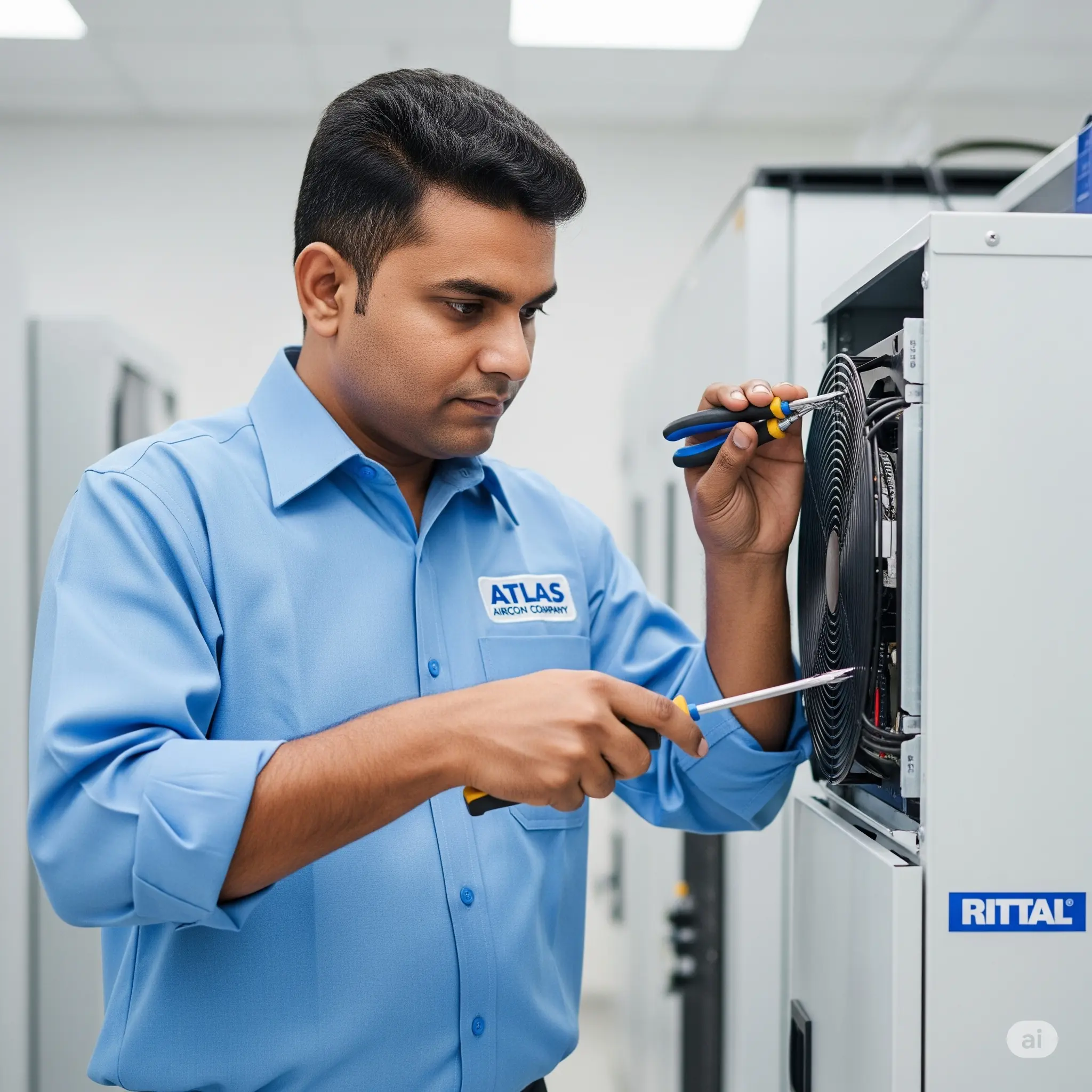
This same specialized knowledge applies to other critical brands like Hoffman, Advance, and various customized CNC machine coolers that utilize complex refrigeration cycles to maintain narrow temperature bands required for logic boards to function reliably in an industrial setting.
Atlas Aircon: The Engineering Choice for Vadodara’s Industrial Backbone
When you are protecting an asset worth millions in Halol GIDC or Makarpura GIDC, you don’t call a hobbyist. You call engineers. Atlas Aircon has been the trusted HVAC engineering partner across Vadodara for over 20+ years.
We believe in absolute technical integrity. We analyze, diagnose, braze, nitrogen test, vacuum, and calibrate. We do not skip steps. Professional and standard AC installation, repair, and engineering are our hallmark. Contact us today for emergency breakdown services or structured preventive maintenance plans across all GIDC industrial estates.
Mehfuz Shahid Khan
Director of Atlas Aircon. With over 20 years of hands-on experience engineering, repairing, and optimizing heavy-tonnage industrial chillers and HVAC matrices across Gujarat.