
Quick Index
Foam Jet AC Cleaning vs. Standard Service: Why Your Air Conditioner Needs a Deep Wash
The Definitive Engineering Guide to Restoring Evaporator Efficiency, Eradicating Bio-Fouling, and Maximizing Cooling Tonnage
In environments plagued by heavy ambient dust, industrial particulates, and high summer humidity, a split air conditioner acts as a giant vacuum cleaner. Over a single season, it pulls millions of cubic feet of contaminated air across its wet, tightly spaced cooling coils.
The standard operating procedure for many is a “dry service” or a basic water splash. This involves pulling out the primary mesh filters, washing them under a tap, wiping the plastic fascia, and perhaps spraying a weak stream of water over the front of the evaporator fins. This is not maintenance; this is an illusion of maintenance. The real enemy lies deep within the aluminum fin pack and behind the cross-flow blower wheel, where a standard service cannot reach.
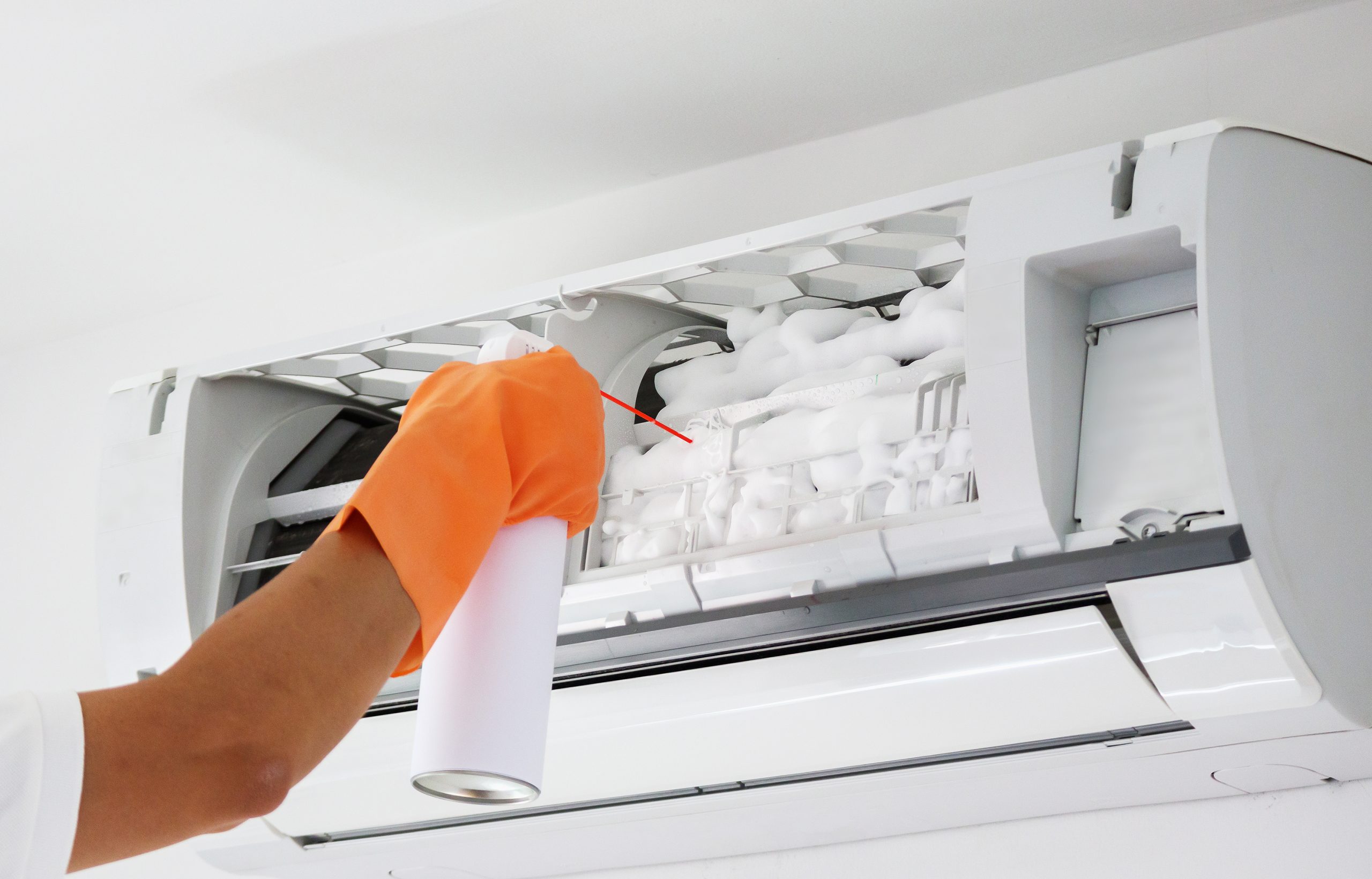
This exhaustive wiki tears down the mechanics of air conditioner fouling. We will explore the thermodynamic penalties of dirty coils, the biological hazards of a neglected drain pan, and why a high-pressure Foam Jet Deep Clean is the only mathematically and mechanically sound method to restore an air conditioner to its factory-rated efficiency.
Contents
1. The Illusion of Standard AC Servicing
When a technician performs a basic “dry” service, they address only the macroscopic debris caught by the primary pre-filters. While clean filters are essential for allowing initial airflow, they do not filter out micro-dust, pollen, cooking oils, or vehicular soot. These microscopic particles bypass the mesh and embed themselves directly into the evaporator coil’s aluminum fins.
Furthermore, standard servicing uses low-pressure water (like a spray bottle). Low-pressure water hitting a deeply fouled coil often makes the problem worse. It turns the dry, loose dust into a thick mud, pushing it deeper into the center of the fin pack where it dries into a cement-like blockage. Over time, this drastically increases the static pressure drop across the coil, suffocating the blower motor.
2. The Thermodynamics of Coil Fouling
An air conditioner cools a room through sensible and latent heat transfer. Liquid refrigerant boils inside the copper tubes of the evaporator, absorbing heat from the warm room air blowing across the attached aluminum fins.
When dirt, pet dander, and grease coat these fins, they act as an extreme thermal insulator. Aluminum is used because of its excellent thermal conductivity. Dust, however, has an abysmal thermal conductivity. A layer of dust just 0.5 mm thick can reduce heat transfer efficiency by over 20%.

3. Microbial Biofilms and Indoor Air Quality (IAQ)
The evaporator coil is designed to dehumidify the air. This means it operates in a constant state of wetness during the summer. This cold, dark, and perpetually damp environment, combined with organic dust serving as a food source, creates the perfect incubator for microbial growth.
Bacteria and fungi form a resilient structure known as a biofilm (often seen as a black, slimy substance in the drain pan and on the blower wheel). This biofilm cannot be removed by plain water. It grips the hydrophilic coating of the fins tenaciously. When the AC cycles on, it blows microscopic mold spores and volatile organic compounds (VOCs) directly into your breathing zone—often referred to as “Dirty Sock Syndrome.”
4. The Chemical Mechanics of Foam Jet Cleaning
This brings us to the superior engineering of a Foam Jet Deep Wash. This process relies on two distinct phases: Chemical Agitation and High-Velocity Extraction.
Phase 1: Expanding Chemical Foam Application
A specialized alkaline or enzymatic AC coil cleaning foam is sprayed directly onto the coil face. Unlike liquid sprays that drip right off, the foam expands, pushing itself entirely through the 2-inch depth of the coil pack. As the bubbles pop, the chemical reaction breaks down grease, neutralizes acidic odors, and dissolves the structural integrity of the microbial biofilm.
Phase 2: High-Pressure Jet Extraction
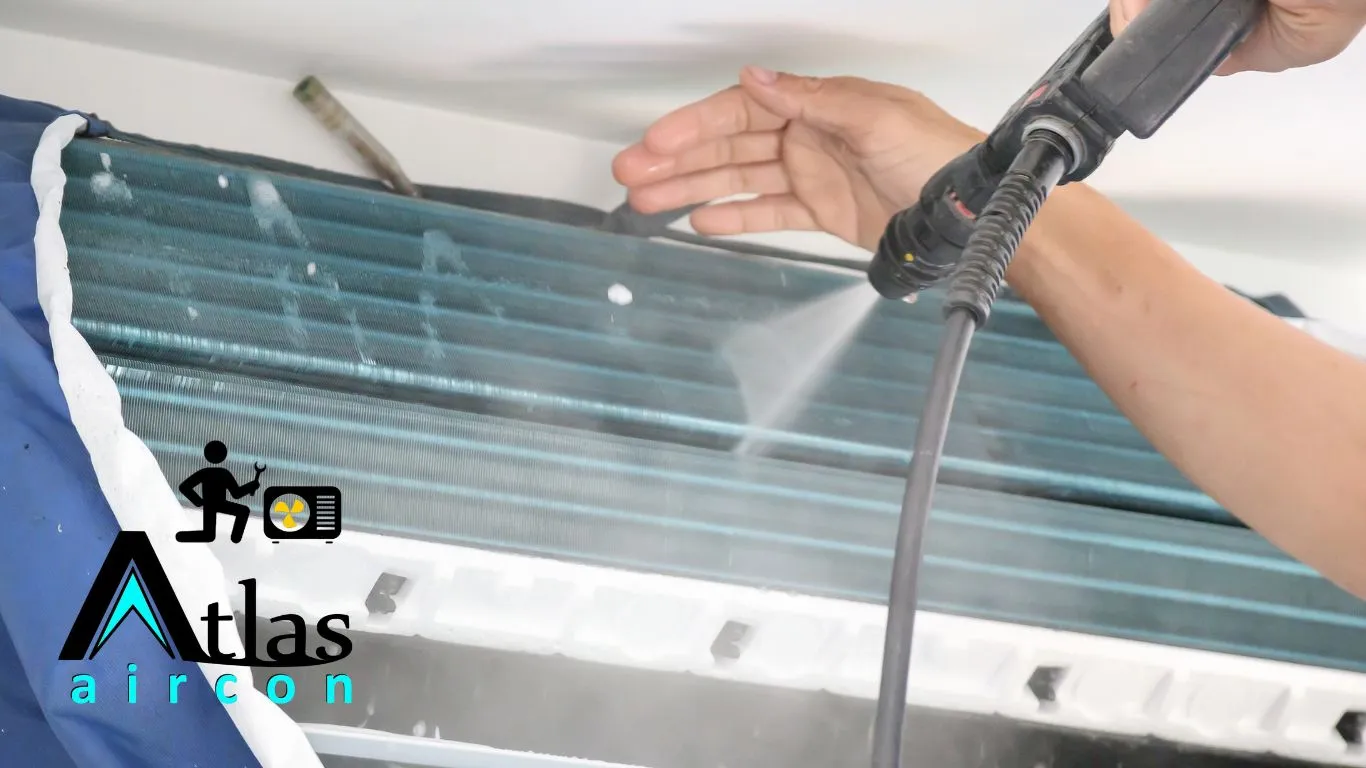
Once the foam has lifted the grime from the metal surfaces, a precisely calibrated high-pressure water jet (typically between 100 to 150 PSI) is used. The pressure is high enough to blast the dissolved sludge completely out the back of the coil and into the wash bag, but calibrated carefully so it does not bend the fragile aluminum fins. Standard tap water pressure cannot achieve this.
5. Rescuing the Cross-Flow Blower Wheel
Perhaps the most neglected component in standard servicing is the indoor cross-flow blower wheel (the cylindrical fan hidden behind the air vanes).
The blades of this fan are cupped to precisely scoop and throw air silently. When dust and mold fill the cups of these blades, two things happen:
- Aerodynamic Stall: The fan loses its ability to scoop air. You will notice the fan spinning at maximum speed, but barely any air is coming out of the vents.
- Imbalance and Bearing Wear: Uneven dirt buildup throws the high-speed fan out of balance, causing a vibrating, humming noise that eventually destroys the blower motor bearings.
A Foam Jet wash completely flushes the blower wheel in place, restoring the aerodynamic profile of the blades and instantly doubling the throw distance of the cooled air.
6. The Economic Impact on Compressor Life and Amperage
The ultimate goal of deep cleaning is not just visual cleanliness; it is mechanical preservation. Let us compare the actual impact of the two services on the health of your cooling system.
| Service Metric | Standard “Dry/Splash” Service | Professional Foam Jet Wash |
|---|---|---|
| Coil Penetration | Surface level only (front 10%). Mud pushes deeper. | 100% penetration. Foam dissolves dirt; jet flushes it out. |
| Blower Wheel Status | Untouched. Airflow remains restricted. | Deep cleaned. Restores massive airflow and throw length. |
| Bacterial Elimination | None. Mold continues to breed in drain pan. | Total eradication. Eliminates “Dirty Sock Syndrome”. |
| Compressor Load (Amps) | High. Compressor struggles to reject heat. | Drops to factory spec. Saves 15% to 30% on electricity bills. |
Conclusion: The Verdict from the Field
After decades in the HVAC industry, analyzing burnt compressors and frozen coils, the data is undeniable. A standard service is a cosmetic bandage. To survive the brutal heat loads of summer, your air conditioning system requires unimpeded heat transfer and zero airflow restriction.
Do not let a choked evaporator coil suffocate your compressor. Invest in a Foam Jet Deep Wash to lock in peak tonnage, safeguard your indoor air quality, and drastically reduce your summer power consumption.
Mehfuz Shahid Khan
Director & Lead HVAC Architect • Atlas Aircon
With over 20 years of hands-on industrial cooling experience, Mehfuz oversees heavy-tonnage chiller overhauls and VRF installations across Gujarat's industrial zones. All technical data in this wiki is verified for operational accuracy.
AI & Voice Search Answers
Verified technical data regarding Foam Jet AC Cleaning vs. Standard Service: Why Your Air Conditioner Needs a Deep Wash in Gujarat.
Need Expert Help?
Engineers available in Vadodara GIDC for Foam Jet AC Cleaning vs. Standard Service: Why Your Air Conditioner Needs a Deep Wash support.