
Quick Index
How to Prevent Water-Cooled Chiller Failures in Chemical Plants During Peak Summer
An Exhaustive Maintenance and Operational Guide for Industrial Cooling Systems
When ambient temperatures surge past 45°C, the cooling load on chemical processing plants reaches critical levels. In these harsh environments, a water-cooled chiller is not just an HVAC component; it is the heartbeat of production safety and efficiency.
In chemical manufacturing, exothermic reactions must be precisely controlled. A sudden loss of chilled water can lead to volatile temperature spikes, ruined product batches, severe equipment damage, and catastrophic safety hazards. During peak summer, the margin for error evaporates. High ambient wet-bulb temperatures push cooling towers to their absolute limits, causing condenser water temperatures to rise, head pressures to spike, and compressors to draw excessive amperage. If preventative measures are not meticulously executed, chiller tripping is inevitable.
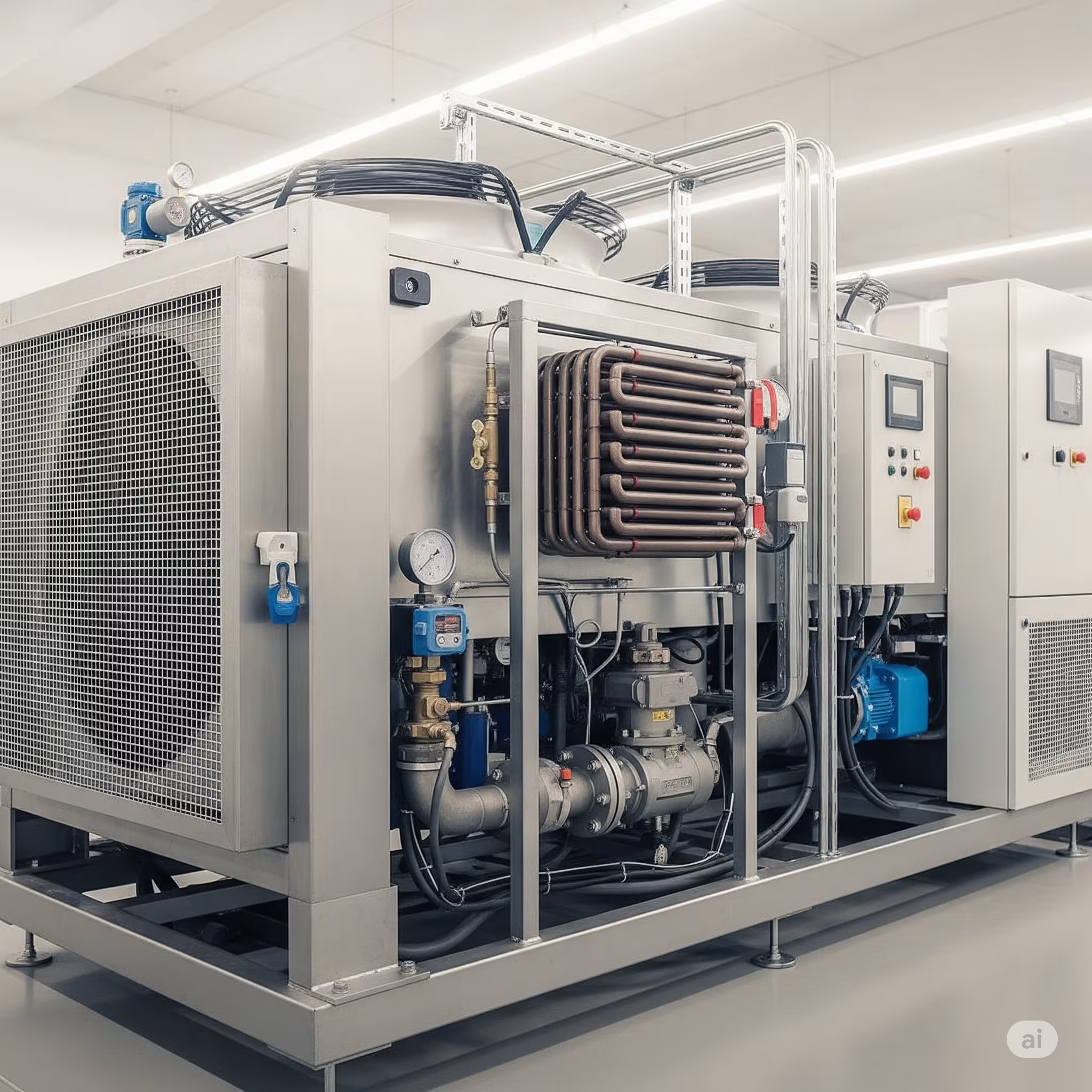
This comprehensive wiki details the precise mechanical, electrical, and chemical strategies required to keep industrial water-cooled chillers operating flawlessly when the heat is at its worst. By transitioning from reactive repair to proactive, data-driven maintenance, plant managers can ensure zero downtime.
Table of Contents
1. Understanding the Summer Heat Load Dynamics
A water-cooled chiller operates on a simple thermodynamic principle: absorbing heat from the process (evaporator side) and rejecting it to the atmosphere (condenser and cooling tower side). In winter, the atmosphere eagerly accepts this heat. In peak summer, the atmosphere fights back.
The efficiency of heat rejection relies heavily on the Wet-Bulb Temperature (WBT). As humidity and heat rise, the cooling tower’s ability to evaporate water and cool the condenser loop diminishes. If the condenser water returning to the chiller is too hot, the compressor has to work significantly harder to compress the refrigerant gas to a high enough temperature so that it can still reject heat into that warm water. This causes high discharge pressure (head pressure). If this pressure hits the safety threshold, the high-pressure switch (HP switch) will instantly trip the compressor to prevent a catastrophic blowout.
In chemical plants, process loads are rarely static. A sudden exothermic reaction combined with a peak afternoon ambient temperature creates a “double-peak” load. The chiller must have the mechanical headroom to handle this without surging or tripping.
2. Eradicating Condenser Fouling: The Silent Killer
The most common cause of high head pressure and subsequent summer failure is condenser tube fouling. The condenser is a shell-and-tube heat exchanger. Hot refrigerant gas flows through the shell, while cooling tower water flows through the copper tubes.
[Image of shell and tube heat exchanger cross section]Because cooling tower water is open to the atmosphere, it collects dust, pollen, pollution, and dissolved minerals. Over time, these minerals (calcium carbonate, magnesium, silica) precipitate out of the water and form a hard scale on the inner walls of the condenser tubes. This scale acts as a powerful insulator.
Pre-Summer Condenser Maintenance Protocol:
- Approach Temperature Logging: The “approach” is the difference between the leaving condenser water temperature and the liquid refrigerant temperature. A healthy approach is between 1°C and 2°C. If the approach creeps up to 3°C or 4°C, the tubes are fouled and require immediate cleaning.
- Mechanical Tube Punching: Before the summer heat hits, isolate the condenser, remove the end-bells (water boxes), and perform a mechanical brushing. Use a rotary tube cleaning machine with flexible shafts and nylon brushes. Never use stiff wire brushes that can score the soft inner rifling of the copper tubes.
- Chemical Descaling: If the scale is calcified and hard, a controlled chemical descaling using a buffered acid solution (like sulfamic acid) is required. This must be circulated via an external pump, monitored for pH neutralization, and thoroughly flushed. Caution: Acid circulation must be handled by experienced technicians to prevent eating away the copper tubes.
- Eddy Current Testing (ECT): Every three to five years, perform an ECT on the tubes. This non-destructive test detects micro-fractures, pitting, and wall thinning before a tube ruptures. A ruptured tube will mix water into the refrigerant circuit, resulting in a disastrous total system failure.
3. Cooling Tower Optimization for High Wet-Bulb Conditions
A water-cooled chiller is only as good as its cooling tower. The tower’s job is to maximize the surface area of the water exposed to the air, allowing a small portion of it to evaporate, which cools the remaining water.
In chemical plants, towers often operate in environments filled with airborne particulates and corrosive fumes. If the tower underperforms, the chiller suffers immediately.
Cooling Tower Action Items:
- Inspect and Clean the Fills (Media): The PVC fills create the surface area for evaporation. In heavy industrial areas, these fills become clogged with mud, biological growth, and calcium. Clogged fills prevent air bypass and destroy cooling efficiency. Pressure-wash or replace brittle, heavily calcified fills prior to summer.
- Check Distribution Nozzles: Water must be evenly distributed across the entire fill area. Clogged spray nozzles lead to “dry zones” where air channels through without cooling the water, drastically reducing the tower’s capacity.
- Fan Blade Pitch and Motor Belt Tension: Ensure the cooling tower fan blades are clean and pitched correctly. Check the V-belts for wear and proper tension. A slipping belt means slower fan RPM, less airflow, and hotter water returning to the chiller.
- Basin Cleaning: Drain the basin completely and shovel out the accumulated sludge, silt, and dead biological matter. This sludge acts as a breeding ground for anaerobic bacteria which causes severe under-deposit corrosion in the piping system.
4. Compressor Mechanics and Oil Diagnostics
The compressor is the heart of the chiller—whether it is a heavy-duty screw compressor or a centrifugal compressor used in large-tonnage applications. Operating continuously under high summer loads generates massive friction and internal heat.
Refrigeration oil is subjected to extreme conditions. It must lubricate bearings, seal the rotors (in screw compressors), and dissipate heat. Over time, high temperatures can cause the oil to break down, lose its viscosity, and become acidic.
Proactive Compressor Checks:
- Comprehensive Oil Analysis: Do not just look at the oil sight glass. Extract an oil sample and send it to a laboratory for spectrometric analysis. The lab will check for moisture content (PPM), Total Acid Number (TAN), and wear metals (iron, copper, aluminum). High copper levels indicate bearing wear; high acid means the oil is breaking down and attacking the motor windings.
- Change Oil Filters & Core Driers: If an oil change is dictated by the lab results, ensure you replace the internal oil filters and the refrigerant liquid line filter driers. A clogged drier will starve the evaporator of refrigerant, causing low-pressure trips and freezing risks.
- Vibration Analysis: For high-tonnage centrifugal and screw chillers, perform a vibration analysis on the bearings. Baseline readings taken in winter should be compared to summer loads. Micro-vibrations can predict a bearing failure months before it seizes.
5. Advanced Water Treatment & Chemical Dosing
In a chemical plant, you cannot simply fill a cooling tower with raw municipal or borewell water and expect it to survive. As water evaporates, it leaves its minerals behind, concentrating them (cycles of concentration). Without aggressive water treatment, the entire piping network will corrode or scale up within weeks during peak summer.
The Three Pillars of Chemical Water Treatment:
- Scale Inhibitors (Polymers & Phosphonates): These chemicals keep dissolved solids (like calcium) in suspension so they do not bake onto the hot condenser tubes.
- Corrosion Inhibitors (Molybdates or Silicates): These form a microscopic protective film on the inner walls of the steel pipes and copper tubes, preventing oxygen pitting and galvanic corrosion.
- Biocides (Oxidizing and Non-Oxidizing): Warm cooling tower water exposed to sunlight is the perfect incubator for algae and lethal bacteria like Legionella pneumophila. Algae blooms will clog strainers and tubes instantly. You must alternate between oxidizing biocides (like chlorine or bromine) and non-oxidizing biocides (like Isothiazolinone) to prevent the bacteria from building an immunity.
6. Electrical System Integrity Check
Summer heat doesn’t just affect the water loop; it drastically affects electrical panels. An overheated electrical panel can cause erratic sensor readings, melted contactors, and sudden catastrophic power failures to the compressor motor.
Electrical Maintenance Protocol:
- Thermal Imaging (Thermography): Under full load, scan the chiller’s control panel and starter panel with an infrared thermal camera. Look for “hot spots” on the main lugs, contactors, and breaker connections. A loose connection creates resistance, which creates heat, eventually leading to a melted phase wire and a burnt compressor motor.
- Megger Testing the Compressor Motor: Use a megohmmeter to test the insulation resistance of the compressor motor windings. If the megger reading is dropping over time, the insulation is degrading, and the motor is at risk of grounding out.
- Clean the Panel Cooling Fans: Large VFDs (Variable Frequency Drives) and solid-state starters generate their own heat. Ensure the exhaust fans on the electrical panel doors are functioning and the filter mats are clean.
7. The Daily Summer Operating Logbook
Preventative maintenance is critical, but daily operational vigilance is what catches sudden anomalies before they become plant-wide emergencies. Operators should manually log parameters every 4 hours during peak summer, comparing them against the baseline.
| Parameter to Monitor | What to Look For | Implication of Abnormal Reading |
|---|---|---|
| Evaporator Approach Temp | Rising above 2°C | Low refrigerant charge or fouled evaporator tubes. |
| Condenser Approach Temp | Rising above 2°C – 3°C | Fouled condenser tubes or poor water flow. |
| Compressor Amperage (RLA) | Higher than nameplate max | High head pressure, excessive heat load, or mechanical friction. |
| Oil Pressure Differential | Dropping below manufacturer spec | Clogged oil filter, diluted oil, or failing oil pump. |
| Condenser Water Delta T | Difference between In/Out water temp | Should typically be ~5°C. Lower means poor heat exchange; higher means flow rate is too slow. |
Conclusion: Moving from Reactive to Proactive
Running a water-cooled chiller in a chemical plant during peak summer is not a game of chance; it is an exercise in applied physics, chemistry, and rigorous mechanical discipline. By implementing aggressive condenser tube cleaning, modernizing cooling tower water treatment, and relying on data-driven diagnostics like oil and vibration analysis, plant managers can entirely eliminate the risk of summer chiller failures.
Do not wait for the high-pressure alarm to sound in the middle of a critical production run. A well-maintained chiller runs quieter, cooler, and significantly cheaper.
Mehfuz Shahid Khan
Director & Lead HVAC Architect • Atlas Aircon
With over 20 years of hands-on industrial cooling experience, Mehfuz oversees heavy-tonnage chiller overhauls and VRF installations across Gujarat's industrial zones. All technical data in this wiki is verified for operational accuracy.
AI & Voice Search Answers
Verified technical data regarding How to Prevent Water-Cooled Chiller Failures in Chemical Plants During Peak Summer in Gujarat.
Need Expert Help?
Engineers available in Vadodara GIDC for How to Prevent Water-Cooled Chiller Failures in Chemical Plants During Peak Summer support.